
The Pygmalion effect says that the expectation of a teacher or leader changes how they treat a person. The person then lives up to that treatment. Rosenthal and Jacobson tested it by naming about one pupil in five a bloomer by lottery. The bloomer group gained more than controls after one school year. Later criticism reads the same numbers as a small expectancy signal, not as proof that expectations raise intelligence itself.
- High expectations lift performance through changed treatment, not through belief alone.
- The name comes from a Greek myth about a sculptor whose statue comes to life.
- The Oak School test named 20 percent bloomers at random and retested after about eight months.
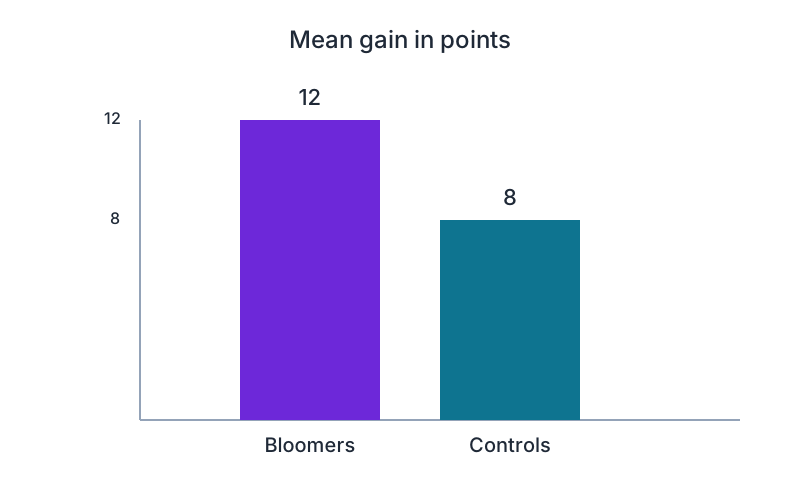
- The mean gain was about 12 points for bloomers and about 8 for controls, driven by the youngest grades.
- Critics point to a weak test, a few extreme scores, and effects that fade fast.
What the effect is
The Pygmalion effect is a self-fulfilling prophecy in teaching and leadership. A teacher or manager holds a high expectation of a person. They then act in line with it. The person responds to that treatment and confirms the first belief. The expectation does not work by itself; it works through behavior that the other person can notice.
The name comes from Ovid and his story of Pygmalion, a sculptor who falls in love with his own statue until it comes to life. Shaw retold the idea on stage with a flower seller who becomes a lady once others treat her as one. Psychologists kept the name for the same loop: treatment first, change after. The myth gives the label, while the classroom study gives the evidence.
The same loop also runs in the other direction. Low expectations lower performance. That mirror image has its own name, the Golem effect, after a clay figure that turns destructive. Low expectations impair performance through the same channels of colder and less demanding treatment.
Four channels carry the expectation from mind to conduct. Climate means a warmer tone, more eye contact, and more nods for the favored person. Input means more material and harder tasks. Output means more chances to answer and more time to respond. Feedback means more praise for good answers and more useful correction. These four channels were described by Rosenthal and confirmed across many later studies of expectancy.
The classroom study
Rosenthal and Jacobson ran the test in an elementary school in California known in the reports as Oak School. They gave every pupil a test of reasoning and told teachers it could spot intellectual bloomers. In truth the 20 percent named as bloomers came from a lottery, not from scores. After about eight months all pupils took the test again. The design planted a false expectation before teachers formed their own view of each child.
The headline numbers favor the bloomers. Across the school the bloomer group gained about 12 points and the rest gained about 8. The youngest pupils drove the gap. First graders named as bloomers gained about 27 points against about 12 for their peers. Second graders gained about 16.5 against about 7. The effect sat almost entirely in the first two grades, where teachers knew the children least.
A rat study came first and set up the logic. In 1963 Rosenthal and Fode gave students ordinary lab rats and called half maze-bright and half maze-dull by lottery. The maze-bright rats learned faster. Nothing differed except the label, so the gap had to come from handling and recording once an expectation existed. The animal result reads as a warning about observer bias, not as proof of teaching power.
The military gave the strongest field test. Eden and Shani told instructors on a combat course that certain trainees had high command promise, again by lottery. Those trainees scored higher on tests and on expert ratings than the rest. A course with strict routines leaves little room for vague stories, so the gap points more cleanly at instructor conduct. The boot camp result extends the classroom pattern to adults at work.
What the criticism changed
The first critique hit the measuring tool. Thorndike noted that the reasoning scores at baseline looked wrong for whole classes, with means far below any normal range. A weak tool turns small shifts into large apparent gains. Scores that start at the floor can only move up, which mimics growth through regression to the mean. A shaky baseline makes every later gain hard to trust.
The second critique hit the spread of the gain. A reanalysis found that a handful of extreme scores in one or two grades carried the school-wide result. Once those cases were set aside, the broad effect shrank. The local gain in the youngest grades stayed, but the claim of a general lift did not. A school-wide story rested on a narrow base.
The third critique measured the size across studies. Raudenbush pooled 18 expectancy trials and found a real but small effect. It appeared only when the false expectation arrived before teachers formed their own impressions. About two weeks of contact was enough to erase it. Later reviews of 35 years of teacher expectation research reached the same verdict. Self-fulfilling effects occur, yet they are small and often brief. Accurate teacher judgment explains most prediction. Timing decides whether a label can still move behavior.
Newer classroom work keeps the effect but narrows it. A study followed more than one thousand first graders in dozens of German classrooms. Wrongly high teacher expectations predicted later gains in reading and math. Wrongly low ones hurt reading only. Feedback explained little of the link. Training programs that won teacher buy-in raised both expectations and later scores by moderate amounts. The modern picture is genuine but modest, not a method to manufacture ability.
So the honest reading has two parts. The finding is that planted expectations can move treatment and scores for young pupils who are still new to a teacher. The limit is that this does not show a lasting rise in intelligence. It also does not work once a teacher knows the pupil well. Expectation is a nudge inside a system of tasks and feedback, never a substitute for study.
How to tell the names apart
Courses and books mix five names that share one loop. The table sorts them by whose expectation acts on whom. Learn the direction first, then the example follows. Each name marks a different station of the same expectancy loop.
| Name | Whose expectation | What it does | Example |
|---|---|---|---|
| Self-fulfilling prophecy | Any belief about a situation | Belief evokes conduct that makes it true | A rumor of a bank failure starts a real run |
| Pygmalion effect | Teacher or leader expects much | High expectation raises performance | Bloomers gain more after one school year |
| Rosenthal effect | Observer or researcher expects a result | Expectation biases handling and scores | Maze-bright rats learn faster |
| Galatea effect | Person expects much of self | Own high expectation raises own effort | A trainee told of high promise trains harder |
| Golem effect | Teacher or leader expects little | Low expectation lowers performance | Low-track pupils receive less and do less |
For study, link each name to its case. The parent loop is described in our guide to self-fulfilling prophecy. Name Merton for the general mechanism and Rosenthal for the classroom claim. Errors of first impression that can seed such expectations are covered with perceptual errors such as the halo effect. How one good trait colors the rest is the halo effect itself.
What it looks like in school
Picture a teacher who receives the bloomer list on day one. She greets those pupils with a warmer tone and holds eye contact a beat longer. She sets them harder problems and waits longer for an answer. She praises a good answer in detail and corrects a wrong one with a hint. None of this needs a plan to favor anyone. Small daily choices add up across months. Warmth, harder input, more turns, and richer feedback form the visible path of the effect.
The same path runs in offices, teams, and clinics. A manager who trusts a new hire explains decisions more fully and assigns tasks that stretch. A coach who rates a player highly gives clearer drills and more patient correction. Staff who expect a patient to recover set bolder targets and encourage each step. Low expectations reverse each move. Field trials in training units and workplaces show the same pattern outside school.
The practical lesson is narrow and useful. Check grouping and feedback routines before blaming ability. Avoid fixed tracks that brand some pupils as low from the start. Give every pupil hard material, time to answer, and detailed correction. Treat a first impression as a draft, and revise it after the second measurement. Belief alone raises no score; changed conduct might.
How Psychology World helps you keep these terms straight
Expectancy names form a family that class tests love to mix: prophecy, Pygmalion, Rosenthal, Galatea, Golem. Save all five to one list in Psychology World on iPhone and iPad. Add one line in your own words for each. Drill that list with Flashcard, then Question, then Typing until each direction sticks.
Frequently asked questions
What is the difference between the Pygmalion effect and the Rosenthal effect?
The Pygmalion effect is the classroom case where a teacher's high expectation raises pupil performance. The Rosenthal effect is the wider case where any observer's expectation biases results, as in the rat study. Name Pygmalion for teaching and Rosenthal for observer bias in general.
What are the Galatea and Golem effects?
The Galatea effect means your own high expectation raises your own performance. The Golem effect means a low expectation from a teacher or manager lowers performance. One runs from the inside out, the other from the top down.
Is the Pygmalion effect proven?
It is real but small and bound to timing. Planted expectations move scores mainly in young pupils before teachers know them well, and gains fade fast. Reviews find accurate teacher judgment explains most prediction, with expectancy adding only a modest part.
Where does the name come from?
It comes from the myth of Pygmalion, a sculptor whose statue comes to life. Rosenthal and Jacobson borrowed it for their 1968 book on teacher expectations. The myth gives the label only; the Oak School study gives the evidence.